
Harlem Thoroughfare
"BUD LIVES!" a film by Haeyong Moon

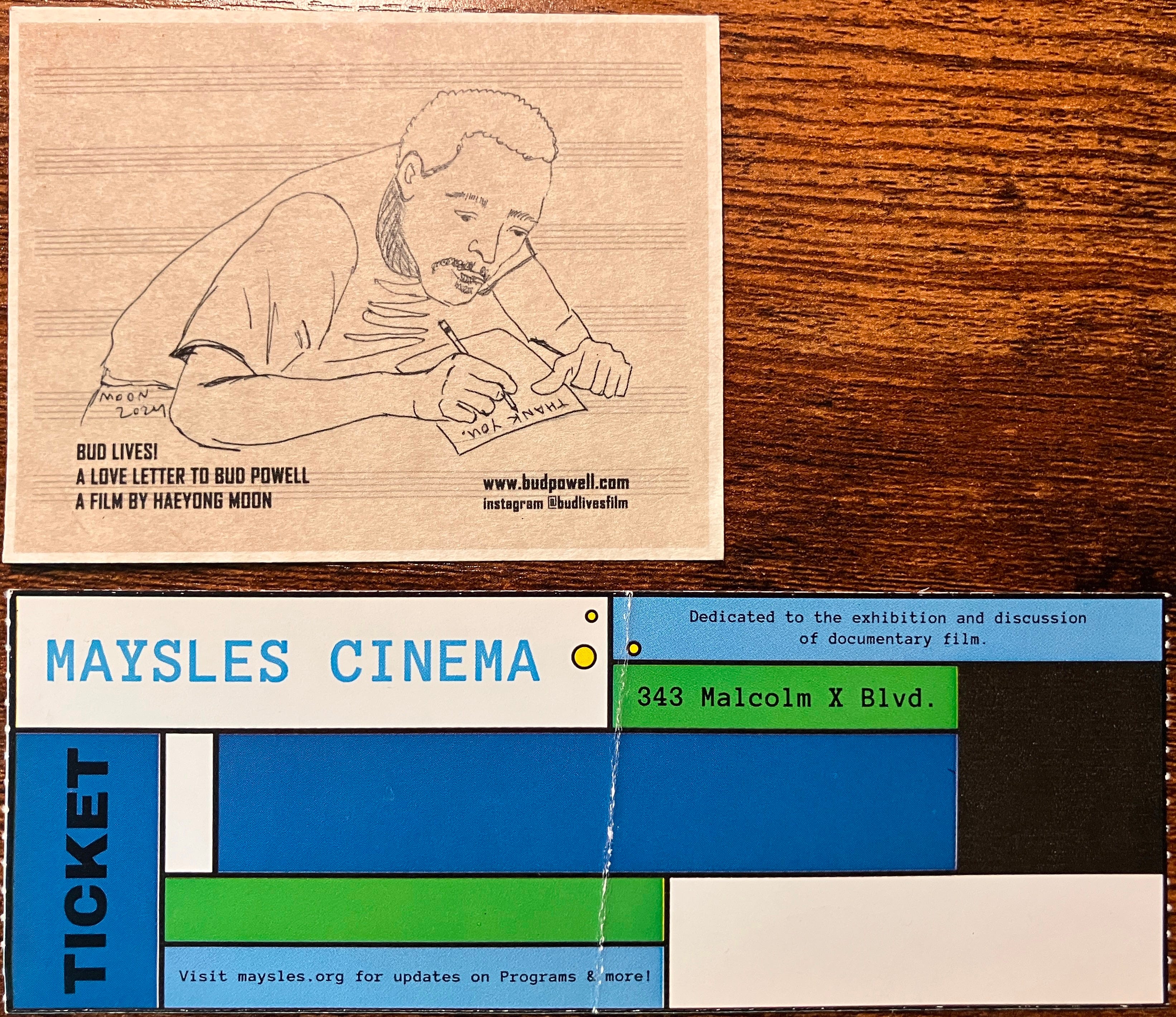
Yesterday afternoon, on the 60th anniversary of pianist Bud Powell’s jazz funeral procession in Harlem, the Maysles Cinema on Malcolm X Boulevard screened BUD LIVES!: A Love Letter to Bud Powell, by filmmaker Haeyong Moon. The 74 minute film is more tribute than historical documentary. It incorporates archival footage from Rutgers Institute of Jazz Studies Francis Paudras Collection on Bud Powell, European performance footage from Copenhagen and Paris, both old and new interviews with Powell’s colleagues and musicians inspired by Powell such as Roy McCurdy and Jason Moran, perspectives from Powell’s surviving family, and beautifully hand-drawn animations from Yongchu Suh.
Bud’s son Earl John Powell was present for the screening, as was Leslie Haynes-Gilmore, daughter of drummer Roy Haynes, Powell’s frequent collaborator, and Maysles’s executive director Kazembe Balagun. There was a palpable community atmosphere in the cozy theater and a number of speeches afterward during the director’s Q&A emphasized Powell’s significance to Harlem specifically and to Black American civil rights struggles generally.
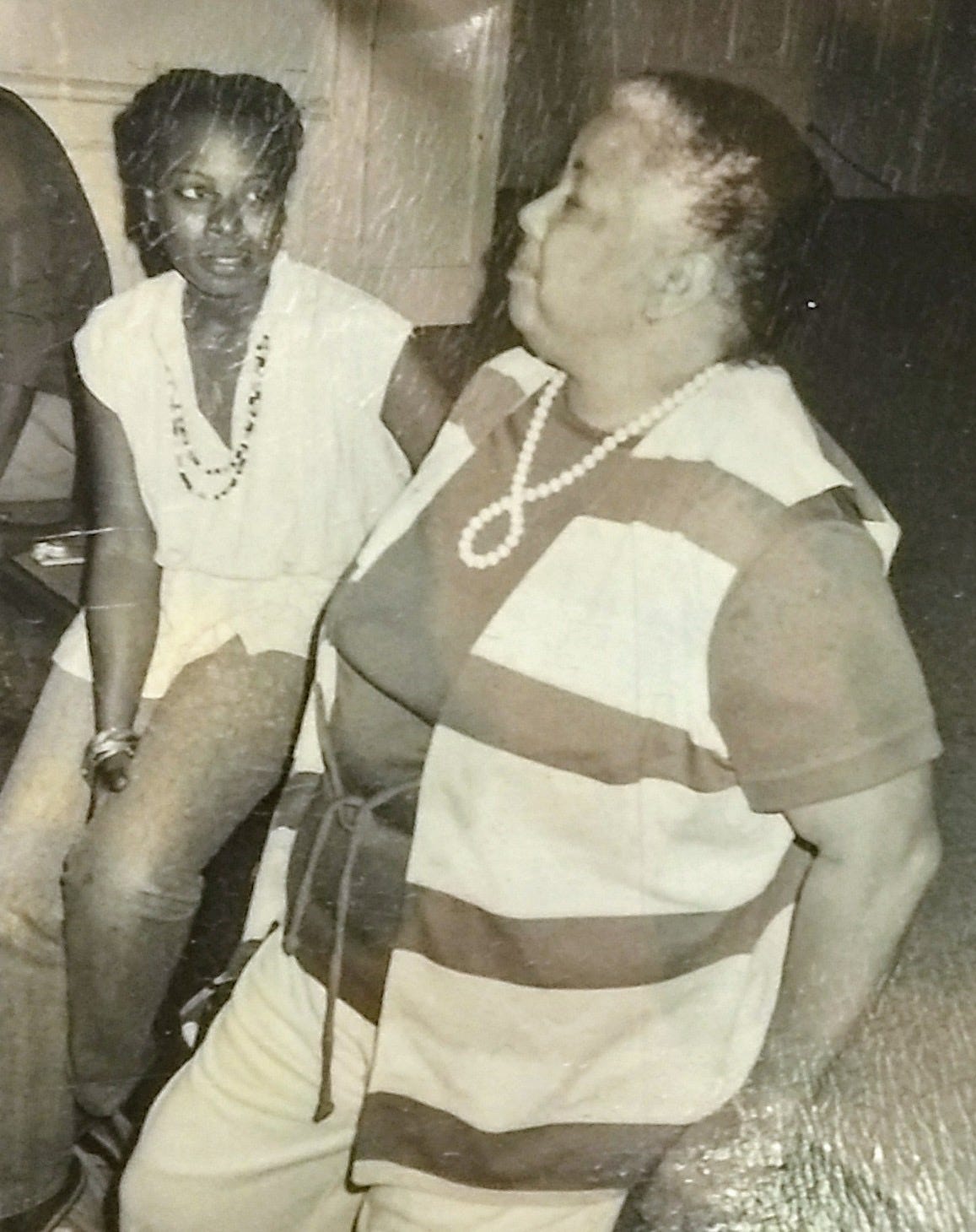
Bud Powell’s partner toward the end of his life was Altevia “Buttercup” Edwards, a native Richmonder. She managed Powell’s business and ran her own jazz establishment in Paris called Buttercup’s Chicken Shack. She returned to Richmond in 1980 to care for her mother, at which time she became a supporter and advisor—along with Rahsaan Roland Kirk’s widow Dorthaan—to the nascent Richmond Jazz Society. Bassist Armand Beaudoin, who performed with The Russell Wilson Quintet opening for legendary drummer Elvin Jones1 in March of 1981 at the VCU Spring Jazz Festival, told me:
I remember finishing up and going back and meeting Elvin Jones. But then Buttercup walked in the room. It was just one of those very powerful moments, seeing that incredible love between people. Elvin Jones just melted when Buttercup walked in.
Edwards was also an accomplished jazz singer and pianist. Her role in Bud’s life is complex and disputed, but in Richmond jazz lore Buttercup is still celebrated.
(Doug Richards, founding director of the VCU Jazz Studies program, in conversation with the author, 2 November 2020)
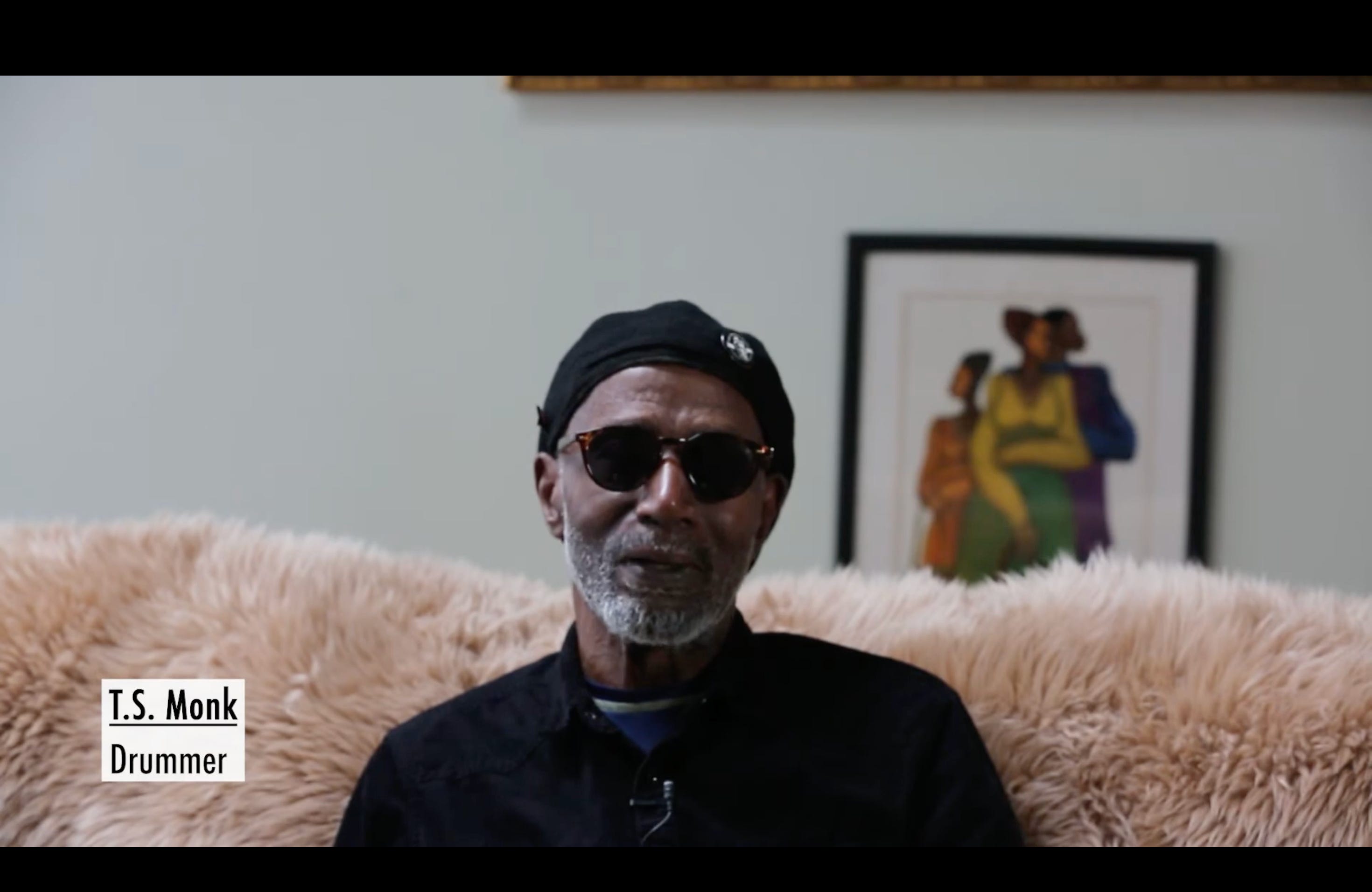
Moon’s film, a “love letter,” doesn’t dwell on Powell’s mental health or tortured artist mythology.2 Instead, she focuses on the pianist’s artistry and humanity, including his deeply loving friendship with Thelonious Monk.3 Various commentators at the screening thanked Moon for this choice, favoring man over myth. Their comments reminded me of something drummer T. S. Monk said after the New York Film Festival premiere of Alain Gomis’s Rewind & Play, a documentary about his father. After a doctor in the audience tried to retroactively diagnose the late pianist with dementia, T. S. took the microphone to respond:
“My father never suffered from any form of dementia. He was fucked over. He suffered from being a Black man in America. These people were abused—Monk, Miles, Billie. All of that kinda stuff will make you not want to deal.
He didn’t suffer from any dementia. He suffered from disgust.”4
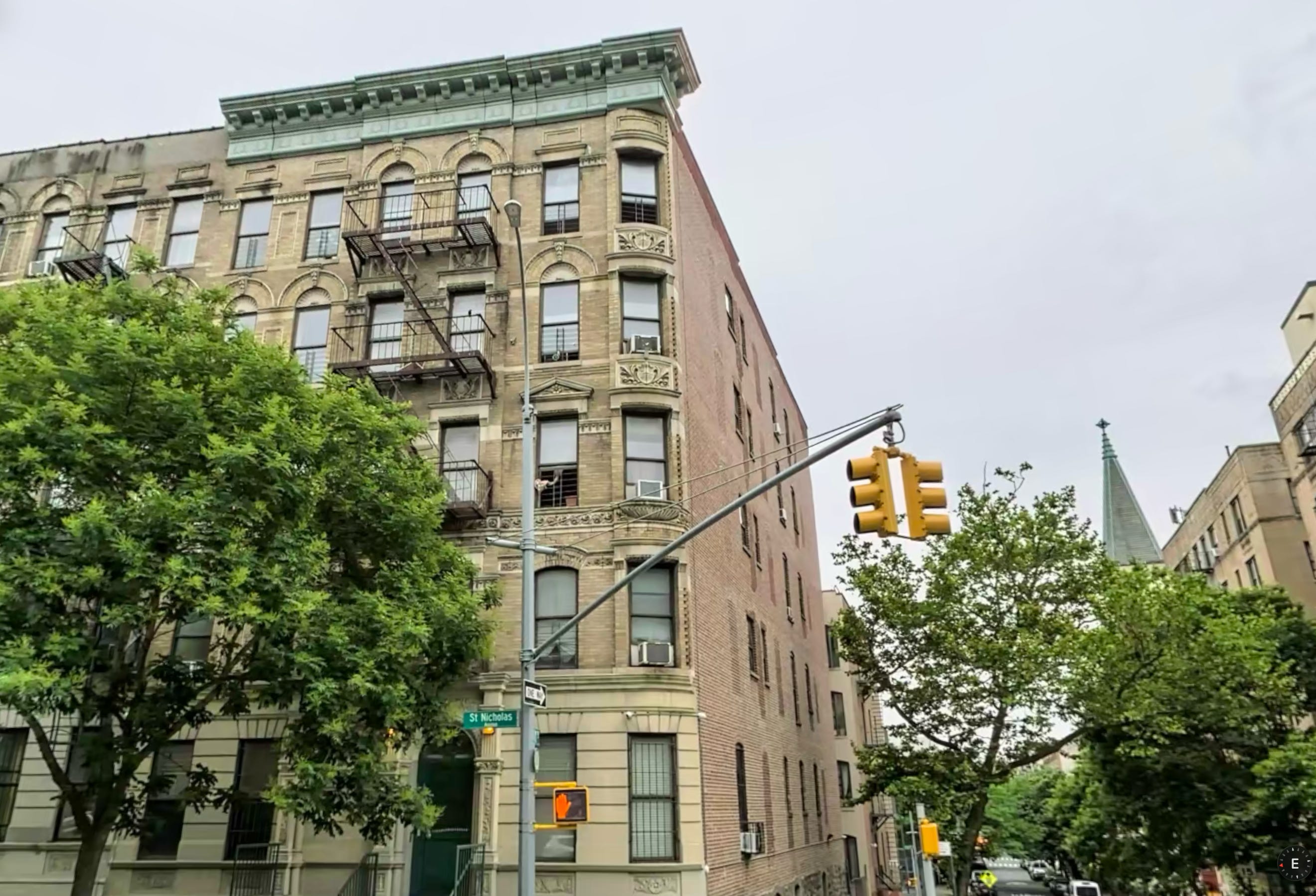
After yesterday’s screening, I walked by Powell’s former apartment building on St. Nicholas toward West 149th Street in Sugar Hill, site of another Powell family residence apparently. I heard r&b and hip hop blaring from car stereos accompanied by singalongs as many neighborhood barbecues spilled out of St. Nicholas Park onto the sidewalk. Strolling through Powell’s past, I wondered about the place of Bud, bebop, and Black American classical music in our cultural memory today.5
Back in the days when I was a teenager
Before I had status and before I had a pager
You could find the Abstract listenin’ to hip-hop
My pops used to say, it reminded him of Bebop
(Q-Tip’s opening lines from “Excursions” by A Tribe Called Quest, a track built on a bass sample from Art Blakey and the Jazz Messengers’ “A Chant for Bu”)
Moon’s documentary contains excellent footage of Powell playing with Elvin Jones.
In 1945, Powell was severely beaten by Philadelphia Transit Police. After that, “he was in and out of mental health facilities for years and frequently treated with shock therapy” (Tonya Mosely, NPR Fresh Air, “Marking the centennial of jazz pianist Bud Powell,” 26 September 2024).
Monk’s 1947 composition “In Walked Bud”—a contrafact of Irving Berlin’s “Blue Skies”—was written for Powell, a dedicated interpreter of Monk’s works: “While Monk was playing and recording Hawk’s music [Coleman Hawkins], his pal Bud Powell was playing and recording Monk’s music in Cootie Williams’s Orchestra. Two months before Monk went into the studio, Williams recorded a revised version of “I Need You So,” now called “’Round Midnight.” By his own account, Bud Powell had to persuade Williams to add the song to his repertoire: “When I was playing with Cootie Williams in 1944, I did most of the arrangements for the band ’cause I was the only one who could write music. I was working a lot with Thelonious then and I wanted Cootie to put ‘Midnight’ in the repertoire. He didn’t want to, but he finally agreed on the condition that he himself would write a second part for the piece. At the time, you see, it had only the main theme.” Later he told his friend and patron Francis Paudras that he threatened to leave if Williams refused to put “’Round Midnight” in the program.” (Kelley, 2009, Thelonious Monk: The Life and Times of an American Original, 100-101)
Quotation from my handwritten notes taken during Q&A with T. S. Monk and director Alain Gomis after the 8 October 2022 premiere of Rewind & Play at the New York Film Festival, Lincoln Center. Any errors or misquotation are my own. Gomis’s closing words on Monk following this tense back-and-forth: “He’s dealing with what we can’t say.”
Ali Shaheed Muhammad, of A Tribe Called Quest, produced Jazz Is Dead Vol. 17 with Adrian Younge and Richmond keyboardist Lonnie Liston Smith. Smith came of age playing with drummer Max Roach, another close collaborator of Bud Powell’s and one of the men responsible for planning Powell’s Harlem memorial service.
An earlier version of this post listed film director Haeyong Moon as the creator of the hand-drawn animations in Bud Lives! Moon just sent me this correction, reflected in the revised post above: the animations were created by Moon's friend Yongchu Suh.
Apologies and thank you for offering this correction!